

Biotech X Philadelphia Notes from the Floor
Biotech X Philadelphia Notes from the Floor
September 18, 2025
This week I was at a biotech/clinical-AI event where I focused on two sessions: a panel on regulatory standards for AI in clinical trials and a second talk on clinical-trial implementation with FAIR data and ontologies. Below is a tight recap with direct quotes, linked where I have sources.
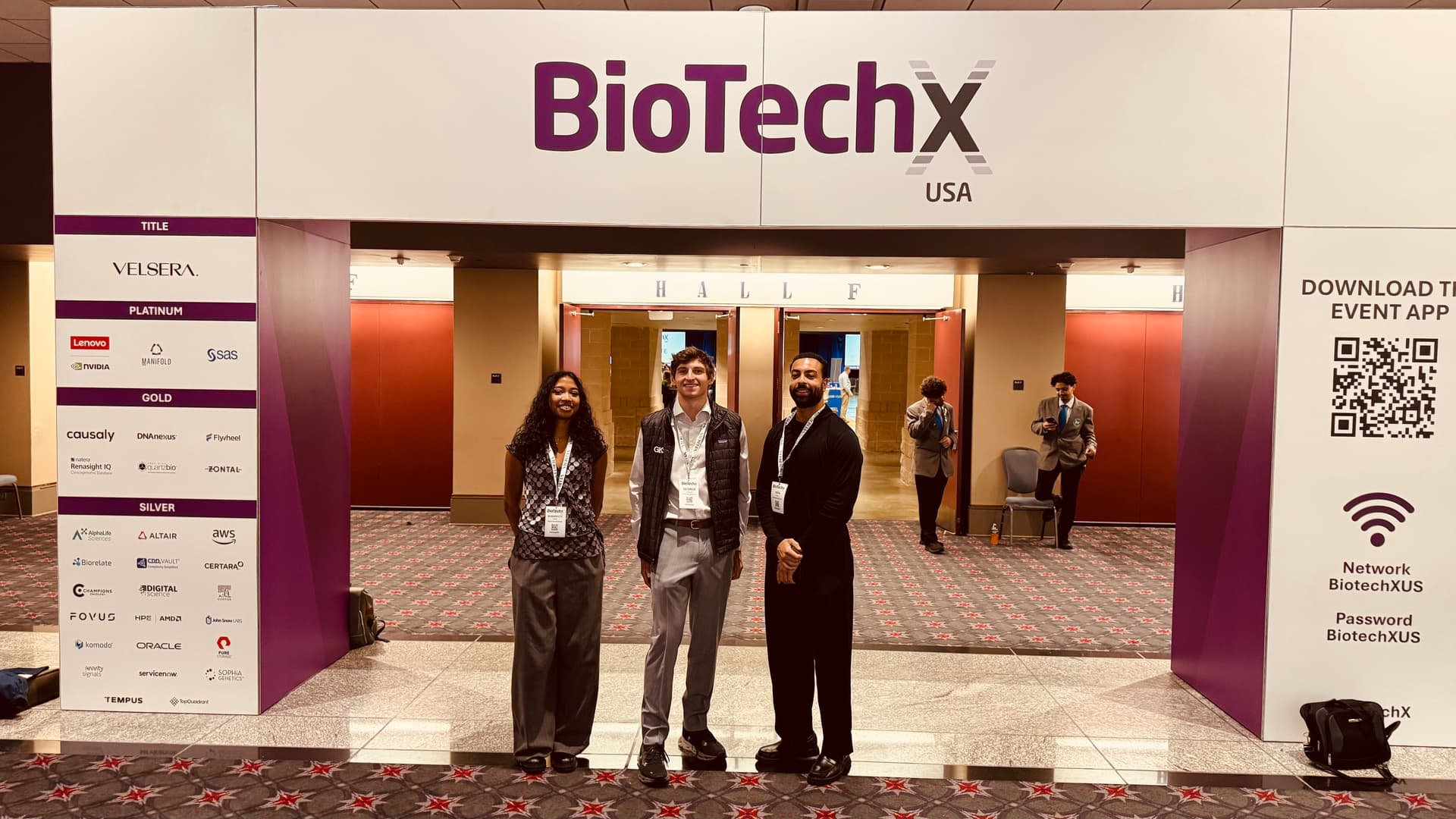
Pictured above — Left to right: Shreestuti Neelam, George Kwiecinski, Issa Kildani.
Summary & TL;DR
BiotechX Philly, the U.S. edition of Terrapin's long-running BiotechX event in Europe, featured 30+ startups alongside a wide range of technology and tools companies. Notably, 19 out of 30 startups highlighted AI-based services or features prominently on their banners. Attendance was strong, and the large talk rooms provided ample opportunity to engage speakers directly with questions across a range of topics. I attended several sessions; below, I've highlighted the two talks that stood out to me the most.
Conversations & Startups That Stood Out
Beyond the formal sessions, some of the best parts of BiotechX were the conversations with founders and builders shaping the next generation of clinical and biotech tools:
-
Amanda Clark at Pulmanage
Working on the future of SaaMD as a scalable platform for real-time, high-quality, remote spirometry. -
Amit Patel at Octozi
Automating clinical development workflows with generative AI and advanced machine learning analytics to accelerate time-to-market. -
Xandria Kovacic, supporting BPNG
Helping revitalize the Biopharma Network Group to bring more connectivity and collaboration to the industry. -
Topaz Turkenitz at Vespper
Building new tools for collaboration and innovation in biotech and pharma.
Talk 1 — Day 1
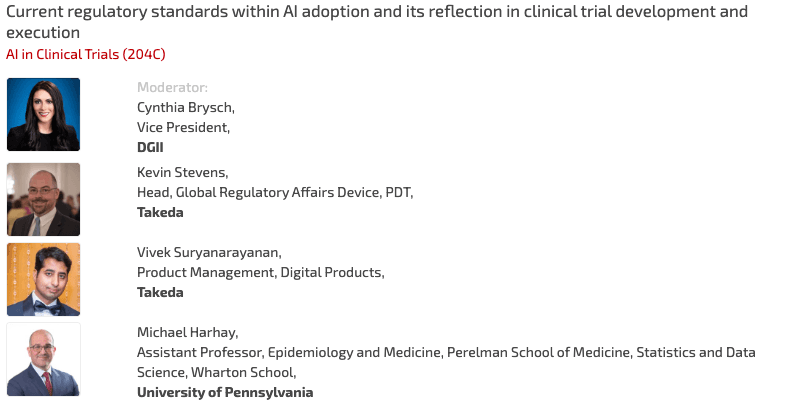
Pictured above — Panel on “Current regulatory standards within AI adoption and its reflection in clinical-trial development and execution.”
Panelists
- Cynthia Brysch, Vice President, DGII (Moderator)
- Kevin Stevens, Head, Global Regulatory Affairs Device, PDT, Takeda
- Vivek Suryanarayanan, Product Management, Digital Products, Takeda
- Michael Harhay, Assistant Professor, Epidemiology and Medicine, Wharton School, University of Pennsylvania
I found this panel to be a trove of information and discussion around AI advancement and tool use in both clinical-trial execution and the post-market regulatory side. My most significant takeaway from this talk was the massive variance in AI tool use, technology understanding, and how regulators may treat these tools in the future.
I asked about the most acute or genuine agency change this year.
-
Panelists pointed to deeper reviewer expertise at the agency, likely because review tools and understanding are bolstered by new tech.
-
They emphasized that while AI tools can help, admission before agency review is still hand-reviewed, as utmost care should still be taken with every agency interaction.
-
I found this insightful because it signals regulators are simply using new technology to review deeper, faster, and quicker.
“We need to always exercise a state of inspection readiness.”
— Cynthia Brysch
This remark underscored the need for companies to continue to utilize global policy from ISO and ICH to harmonize standards.
There was also ample discussion around the FDA vs EMA regulatory climate on AI adoption. Kevin Stevens gave strong remarks on the regulatory pendulum — periods of tightening and increased scrutiny, followed by phases where scrutiny lessens.
Talk 2 — Day 2
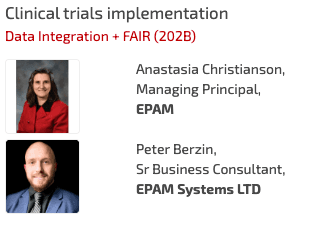
Pictured above — Panel on “Clinical trials Implementation, Data Integration + FAIR”
Panelists
- Anastasia Christianson, Managing Principal, EPAM
- Peter Berzin, Sr Business Consultant, EPAM Systems LTD
My core takeaway here is: regardless of the size or scale of the organization or project, using the right datasets and connecting them with ontologies and a Model Context Protocol is crucial for delivering the best information to those who need it.
Peter Berzin gave excellent examples of this workflow in action and how datasets can be harmonized.
Meanwhile, Anastasia Christianson shared strong clinical trials insights, including a clear breakdown of what FAIR data means:
- Findability
- Accessibility
- Interoperability
- Reusability
The purpose of FAIR is to make clinical trial data findable, accessible, interoperable, and reusable, ensuring past trial knowledge isn’t locked away but can be integrated, harmonized with ontologies, and applied to design more robust, scalable studies.
Closing Remarks
Across sessions, a consistent theme emerged: AI is everywhere, but quality data, harmonization, and regulatory trust remain the fundamental levers for progress. The conversations underscored both the excitement and the hard work still ahead.