

How KeyPedia Helps Auditors Write Observations Without Bias
How KeyPedia Helps Auditors Write Observations Without Bias
February 11, 2026
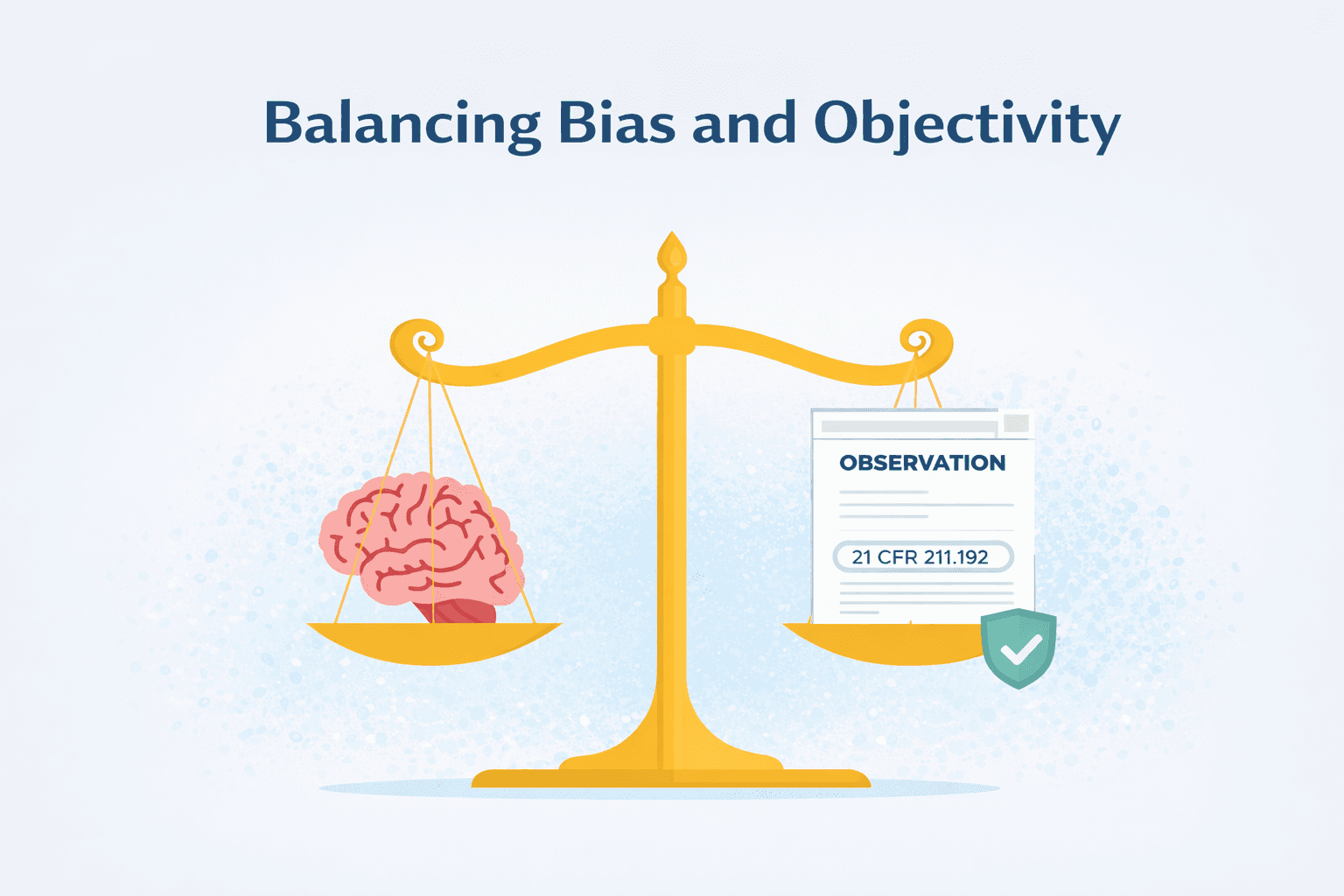
Reality of Auditor Bias
Auditors aim to be objective; however, in practice, observations are written by humans, and humans carry bias. Even a simple search for "how to write an observation without bias" yields only limited tools and guides, some of which are in accountancy and unrelated to our critical GxP environments.
That bias is rarely intentional. It often shows up subtly:
- A microbiologist focusing heavily on aseptic technique
- A quality systems auditor who emphasizes documentation gaps
- A former manufacturing lead scrutinizing process controls more aggressively
Each perspective is valid, but when observations vary based on who is auditing rather than what the FDA has historically cited, inconsistency creeps in.
This is where KeyPedia™ comes in.
The Problem: We Are Naturally Biased
While we all carry bias, perhaps some of the best auditors to learn from are investigators and others that assemble and compile observations with a critical risk-based approach. Additionally, these datasets are available, but still need harmonization. With proper structuring and harmonization however, we can have incredibly robust methods of structuring and paginating data within our organizations.
When auditors draft observations, they often rely on:
- Personal experience – Their own history and background
- Input from other auditors – Collective institutional knowledge
- Training history – What they learned in formal education
- Prior inspections – Past audits they've conducted or observed
- Institutional habits – "This is how we usually write it"
Over time, this can lead to:
- Overly subjective wording due to incorrect interpretation of the regulation involved
- Inconsistent severity framing across different auditors
- Observations that are harder to defend during regulatory review
- Findings that don't clearly map to FDA precedent
Even when two auditors cite the same issue, the language, tone, and regulatory grounding can differ significantly.
KeyPedia's Approach: Ground Observations in FDA Reality
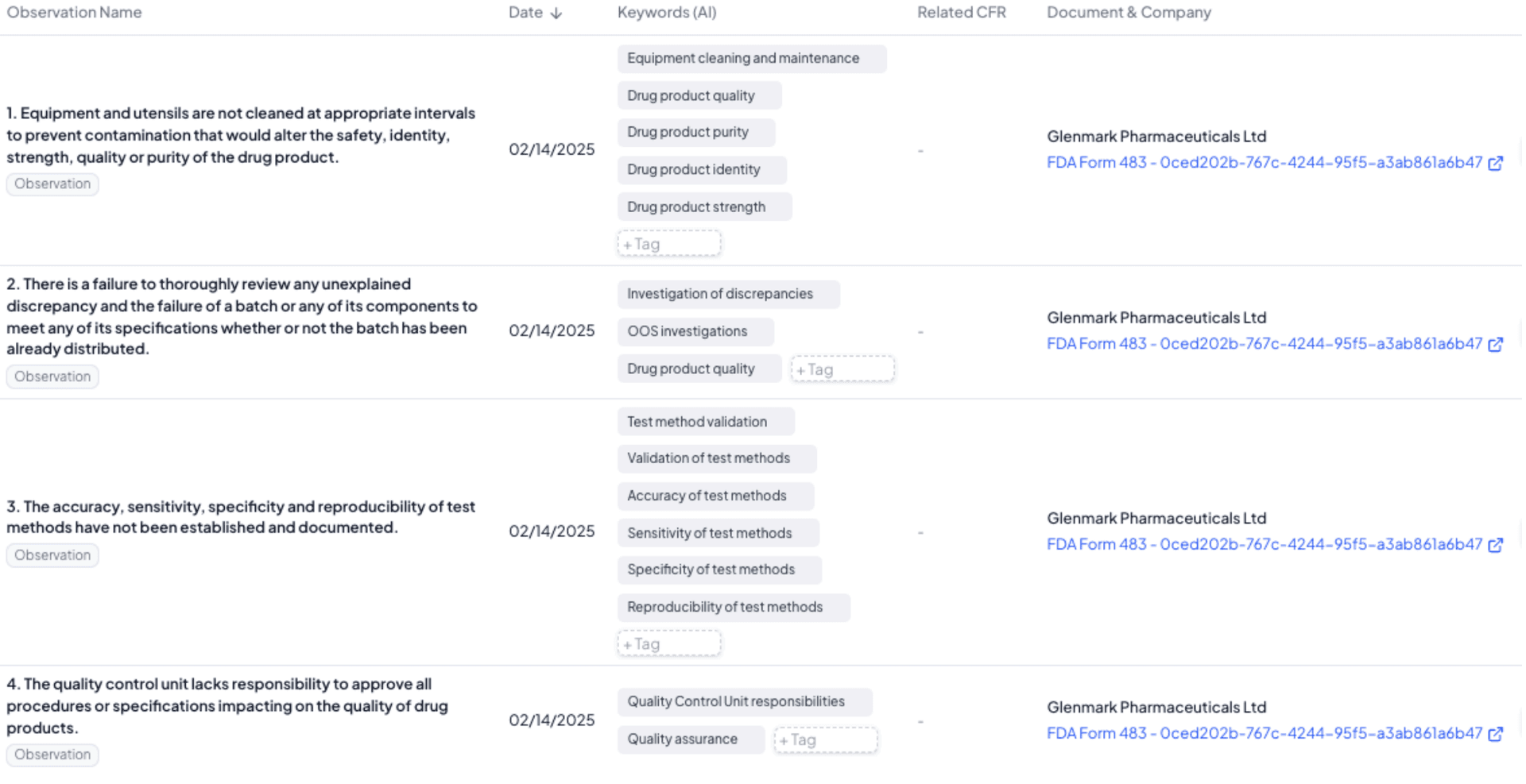
(Left to right) Observations Name, Date, Keywords are AI extracted and paginated in a batch, Related CFR codes for CFR tagged observations, Document for citation check.
KeyPedia does not invent regulatory expectations. Instead, it anchors observation drafting in:
- FDA Form 483s – Direct inspection observations
- Establishment Inspection Reports (EIRs) – Detailed facility assessments
- Warning Letters – Serious violations and FDA's official position
- FDA Guidance Documents – Current thinking and expectations
- Historical inspection citations – Patterns across thousands of facilities
By analyzing how the FDA has actually cited similar issues in the past, KeyPedia helps auditors:
- ✓ Align wording with FDA precedent
- ✓ Reduce subjective or emotionally charged language
- ✓ Avoid over- or understating regulatory risk
- ✓ Reference the most relevant guidance or citation patterns
Think of it as "baking in" FDA guidance and enforcement history into the drafting process.
Reducing Bias Without Removing Auditor Judgment
This is important: KeyPedia doesn't replace auditor expertise.
Auditors still:
- ✓ Identify the issue
- ✓ Assess the system impact
- ✓ Apply professional judgment
What KeyPedia does is help answer questions like:
- "How has the FDA historically described this issue?"
- "What CFR sections are most commonly associated with similar findings?"
- "What language is most defensible and consistent with precedent?"
The result is an observation that reflects:
✗ Not the auditor's personal bias
Why This Matters
Unbiased, well-grounded observations:
- Easier to understand and remediate – Companies know exactly what to fix
- Hold up better during FDA review – Defensible with precedent
- Improve consistency across audit teams – Standardized language and approach
- Reduce internal debates – Less time spent on "wordsmithing" observations
- Build trust with regulated companies – Transparent and fair assessment
For auditors, this means spending less time debating phrasing, and more time focusing on actual quality risk.
The Bottom Line
Auditor bias isn't a flaw, it's a human reality. By structuring and paginating observation data, we can achieve cleaner data with better outcomes while adjusting for repeat citations across facilities.
KeyPedia helps mitigate that reality by grounding observations in what the FDA has already said, cited, and enforced, at scale.
The outcome isn't automation for automation's sake. It's clearer, more consistent, and more defensible.
Learn more about how KeyPedia™ can help you.